Stacks and Queues
Stacks and queues are two data structures that restrict how you're allowed to add and remove elements. Instead of accessing any index you want, you can only add or remove elements from specific ends, which makes them perfect for problems that naturally involve an ordered sequence of steps.
Stacks
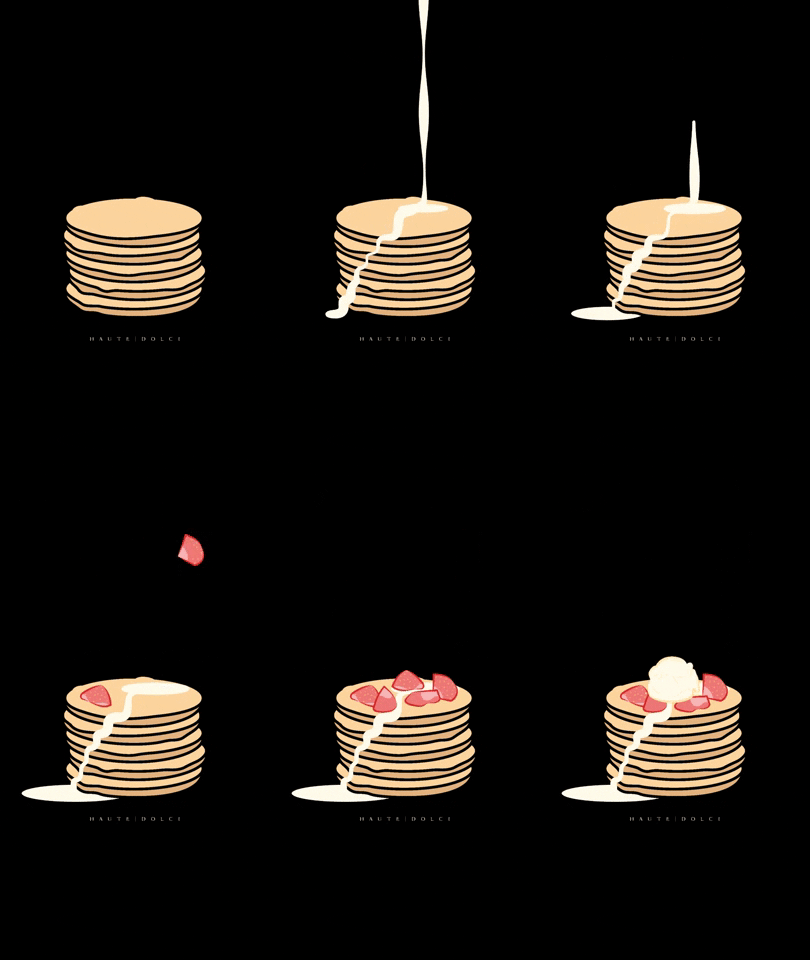
A stack works like a stack of pancakes: the last one you place on top is the first one you take off. This behavior is called LIFO, Last In, First Out.
| Method | Description |
|---|---|
push(value) | Adds a value to the top of the stack |
pop() | Removes and returns the value on top of the stack |
peek() | Returns (without removing) the value on top |
Queues
A queue works like a line of people waiting for something: the first person to get in line is the first person served. This behavior is called FIFO, First In, First Out.

| Method | Description |
|---|---|
offer(value) | Adds a value to the back of the queue |
poll() | Removes and returns the value at the front |
peek() | Returns (without removing) the value at the front |
An FRC-relevant example of a queue is a command scheduler: commands are often processed in the order they were requested, with the oldest request handled first.
Implementing Stacks and Queues in Java
Java has an older Stack class, but it's considered legacy and is generally
avoided in modern code because of some quirks in its design. Instead, both stacks and
queues are implemented using the Deque interface (pronounced "deck," short for
"double-ended queue") and its ArrayDeque implementation, which supports adding and
removing from both ends efficiently.
Show code
import java.util.ArrayDeque;
import java.util.Deque;

Deque<Integer> commandQueue = new ArrayDeque<Integer>();

// Using it as a queue (FIFO)
commandQueue.offer(1);
commandQueue.offer(2);
System.out.println(commandQueue.poll()); // Prints 1

// Using it as a stack (LIFO)
commandQueue.push(1);
commandQueue.push(2);
System.out.println(commandQueue.pop()); // Prints 2
Since Deque supports operations on both ends, the same object can be used as either
a stack or a queue, depending on which methods you call.